Almost 70% of the earth’s surface is water; less than 1% of that is fresh water; and less than 1% of that is available for consumption. Therefore water demand in the developed world has tripled since 1950 – according to the UN, 2 out of 3 people will be living in water stress by 2025 if present patterns continue. Even if your building project is not aiming for LEED-certification, it’s important to have sustainability and conservation goals for the project that will encompass not only the duration of the works but also O&M savings goals over the lifetime of the building. There are significant cost and energy savings to be made as a result of some of these water-saving methods:
1. Implement an erosion and sedimentation plan for the duration of the works. This limits rainwater pollution and eases the burden on municipal water treatment systems
2. If you are landscaping use native plants that require little or no watering and use mulch made from composted organic matter to keep the roots cool and moist in warm weather
3. Retrofit low-flow valves on toilets, showers and urinals to reduce water use, or install new WaterSense certified plumbing fixtures. You can reduce water use by 30% from baseline rates using these fixtures.
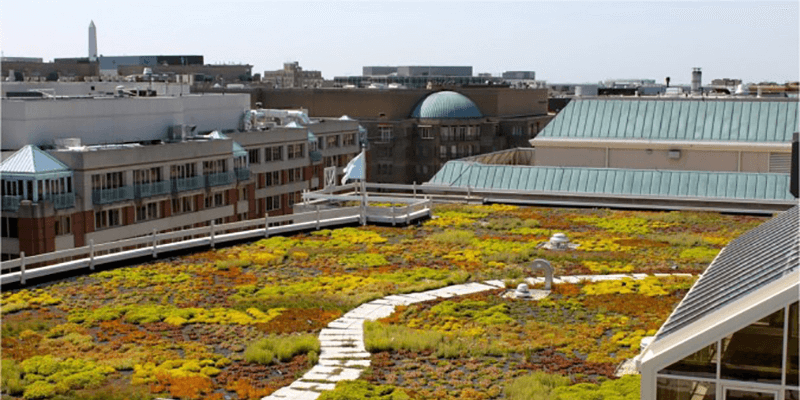
4. Invest in a vegetated roof. It reduces heating/cooling energy use and costs in the building, and reduces rainwater runoff. It also looks great, and if it’s an intensive one you can use it as a garden space where people can go for meetings or breaks.
5. Educate
- Place signs on new equipment on how to use water wisely
- Initiate a suggestion or incentive programme
- Let people in the building know about wise water practices using display, leaflets and email
6. Maintain the new equipment as part of standard O&M practices, and implement metrics to keep track of the savings you are making.
The human factor will be critical to the success of your water conservation strategies. Also it will be important to get the buy-in of the operatives on-site during the works, and after handover the facilities team, cleaning staff and building occupants will need to understand and embrace the idea of conserving water, against the bigger picture of general sustainability and its benefits for all of us.


